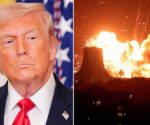
Joe Kent: Israelis Drove U.S. Decision To Take Action, Which We Knew Would Set Off A Series Of Retaliations By Iran
TUCKER CARLSON: “I cannot in good conscience support the ongoing war in Iran. Iran posed no imminent threat to our nation.” Iran posed no imminent threat to our nation. How did you reach that conclusion? JOE KENT, FORMER DIRECTOR OF THE NATIONAL COUNTERTERRORISM CENTER: I think this is key. I mean, this would be more challenging to explain had the Secretary of State, the President, and the Speaker of the House not come out and said that we conducted this attack at this time because the Israelis were about to do so. So that takes away the argument that there was an imminent threat, as in Iran was planning to attack us immediately. That just simply did not exist. CARLSON: May I ask you to pause? And so I’ve heard people say that, and this just happened, but history has a way of getting rewritten in real time. And then you look back 10 or 15, 20, 25 years later, and no one seems to understand the things that you saw because they’ve been eliminated. So I think it’s important to stop and say, here’s what we actually know. So I’d like now, if we could, just to play one of the statements that you alluded to. And that’s from Marco Rubio, the Secretary of State. And this was shortly after this war commenced. And he was explaining, as is his habit, in a thoughtful, precise way, why. Here’s Secretary of State Marco Rubio. SECRETARY OF STATE MARCO RUBIO: And so the President made the very wise decision. We knew that there was going to be an Israeli action. We knew that that would precipitate an attack against American forces. And we knew that if we didn’t preemptively go after them before they launched those attacks, we would suffer higher casualties and perhaps even higher those killed. And then we would all be here answering questions about why we knew that and didn’t. CARLSON: Okay. So that is his almost contemporaneous explanation. And it’s not offhand. He reasons it out. He explains there’s a logic chain there. And he says, we knew not that Iran was going to attack. He did not say that. He said, we knew that Israel was going to attack Iran. And in retaliation for those attacks by Israel against Iran, Iran might attack American forces. So the imminent threat that the Secretary of State is describing is not from Iran. It’s from Israel. KENT: Exactly. And I think this speaks to the broader issue. Who is in charge of our policy in the Middle East? Who is in charge of when we decide to go to war or not? In this case, with what the Secretary described, and later on the President, later on the Speaker of the House, and the way the events played out, the Israelis drove the decision to take this action, which we knew would set off a series of events, meaning the Iranians would retaliate. Now, I think there’s a potential there where we could have done several different things. We could have simply said to the Israelis, no, you will not. And if you do, then we will take something away from you. I think that it’s fine that we offer defense to Israel. But when we’re providing the means for their defense, we get to dictate the terms of when they go on the offensive. Otherwise, they stand to lose that relationship. And the Israelis felt emboldened that no matter what they did, no matter what situation they put us in, that they could go ahead and take this action. And we would just have to react.